Traffic dropped after AI-generated blog posts? How to find the cause
If your organic traffic fell off a cliff after you started publishing AI-generated posts, this is for you. It happened to me, on my own product.
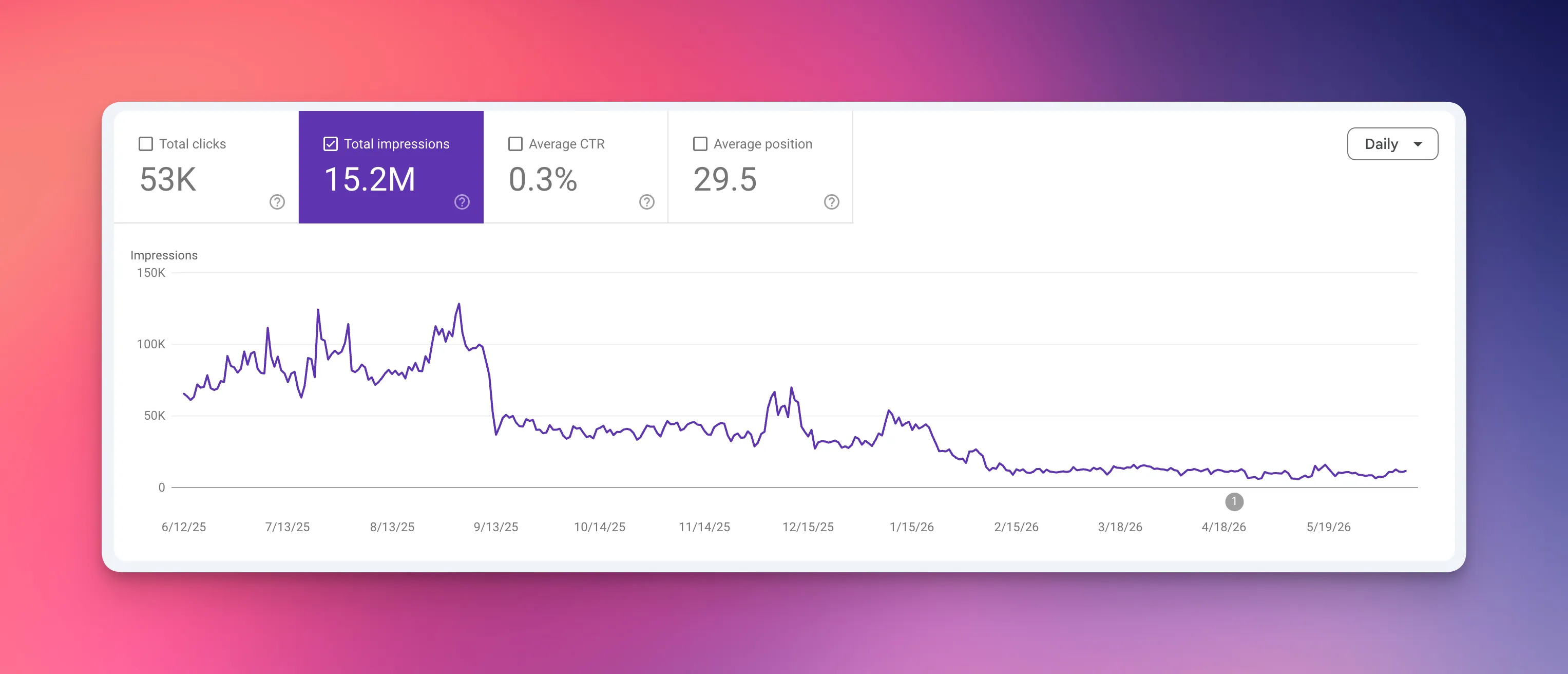
Feather went from an average of 60k-80k views to around 10k, and it hasn’t recovered yet. Here’s what happened, how I diagnosed it, and what I’d do differently.
What happened
Almost a year ago, I kept seeing people on X and LinkedIn talk about automating their marketing with AI. The tools looked legit and the landing pages were slick, so I signed up for one.
Month one went better than I expected. I started ranking for new keywords, and there were blogs on keywords where I had no business ranking. It felt like a cheat code.
Around 45-50 days in, I stopped checking. I trusted the system and spent my time on the product instead.
That was the mistake. Posts were going live on my site and I wasn’t reading them.
How to diagnose a traffic drop in Search Console
Before you blame anything, confirm what actually changed. This is the order I’d go in:
- Performance → compare date ranges. Compare a period before the drop against after. Look at clicks and impressions separately. A drop in impressions means you lost rankings. A drop in clicks with stable impressions is a CTR problem.
- Check the Pages tab. Sort by clicks lost. Is the loss spread across the whole site, or concentrated on specific pages or a section?
- Line the drop up with your publishing history. Find the date the drop started and compare it to when you began publishing new content, and when you changed anything else (templates, redirects, migrations).
- Check Manual actions and Security issues. If there’s a manual action, Google will tell you here.
- Check Pages (indexing). Look for new “Crawled - currently not indexed” or “Duplicate” pages piling up.
For me, step 3 was the giveaway. The drop followed the period when the tool was publishing posts on my site.
What went wrong with the posts
When I finally read what had gone live, a lot of it was low quality. No human had reviewed any of it before it was published.
The risk with unreviewed AI content is that nobody is accountable for it. Nobody checks whether a post is accurate, whether it says anything useful, or whether it even fits your product. One bad post doesn’t hurt much, but a pile of them published automatically makes the whole site look low quality.
I can’t tell you exactly how Google weighted those posts, and I don’t want to pretend I can. What I can tell you is that the traffic fell after they went live.
What I did
I deleted the AI-generated posts and cancelled the tool. Recovery is slow, and my traffic is still well below where it was.
If you’re in the same spot, here’s what I’d suggest:
- Stop publishing automated content immediately.
- Audit everything that went live while you weren’t looking. Read it as if a stranger wrote it.
- Delete or fully rewrite the weak posts instead of leaving them up.
- Keep watching Search Console. Rankings take time to come back.
The lesson
Do not let a single AI output go to the world without your review.
Everyone is telling you to automate everything so it needs no human. For anything where the stakes matter, that’s a recipe for disaster. Use AI as a helper, not a replacer.